Lucknow: Chief Election Commissioner of India Gyanesh Kumar, an alumnus of the 1979–1981 batch of Colvin Taluqdars’ College, returned to his alma mater for a special interactive session focused on electoral literacy, democratic participation and the responsibilities of citizens in the world’s largest democracy.
The visit began with a warm reception on the college campus. Members of the Student Council accorded Kumar a formal Guard of Honour, while members of the College Management Committee welcomed him with a floral bouquet. Secretary-cum-Manager Kunwar Manish Vardhan Singh, along with members of the management committee including Kr. Vinay Kumar Singh, Babu Sanjay Pratap Singh, Brajesh Naraian Seth, Sheikh Iqbal Mubashir Kidwai, Th. Rohit Nath Singh, Bhaiya Dinesh Dutt Ram Pandey, Ch. Faiz Mahmood, Raja Birendra Singh Parmar, Vivek Seth, Kr. Dhyanpal Singh and Vasudhendra Pratap Singh, were present to receive the Chief Election Commissioner.

Sachidanand Singh, Principal of the ISC Wing, and Anupama Singh, Principal of the UP Board Wing, also welcomed Kumar.
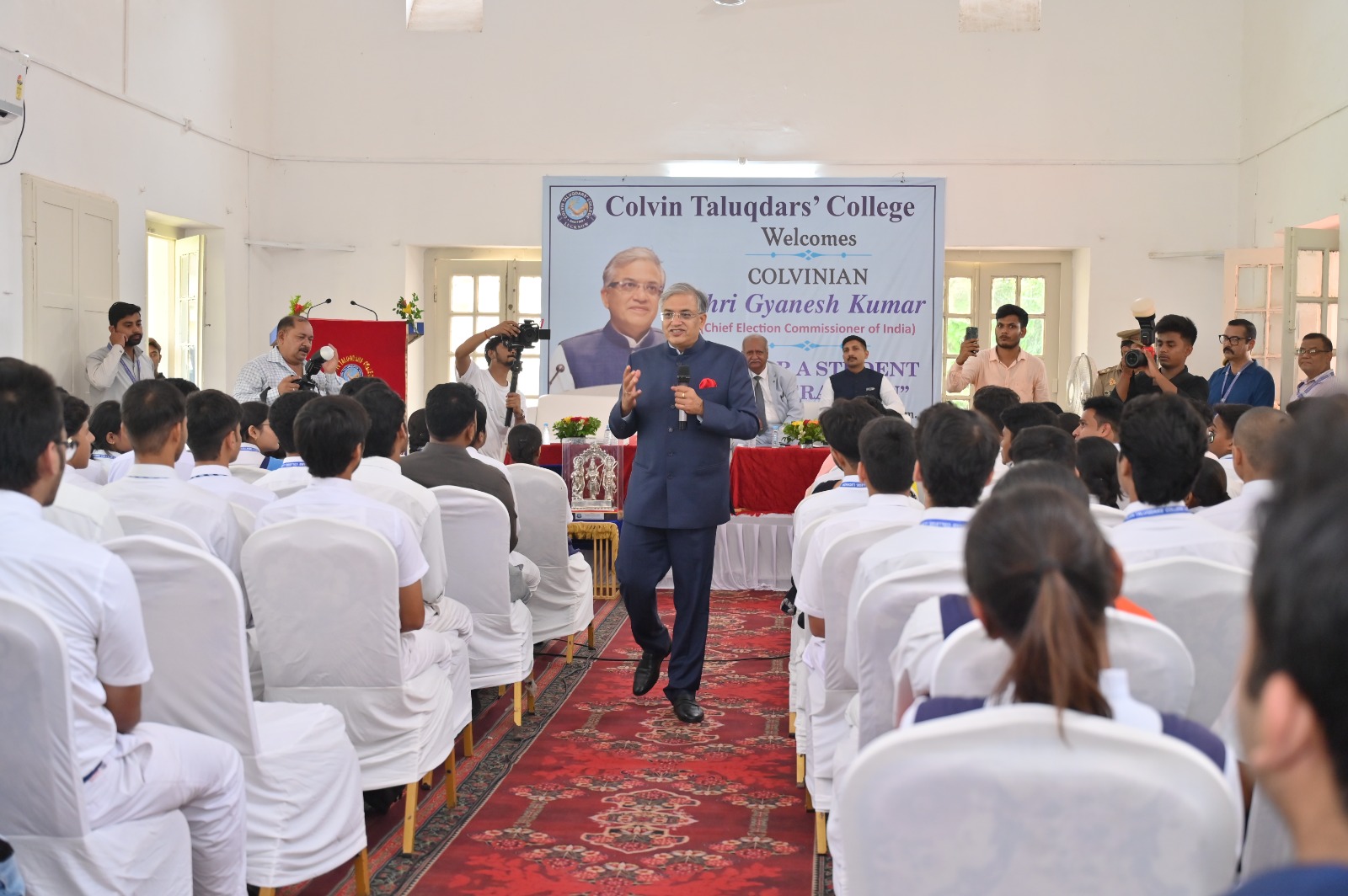
The Chief Election Commissioner was subsequently escorted to Awadh Hall, where the formal proceedings commenced with the lighting of the ceremonial lamp in the presence of District Magistrate Vishak G. and college authorities. The college choir presented a welcome song, adding a celebratory note to the occasion.
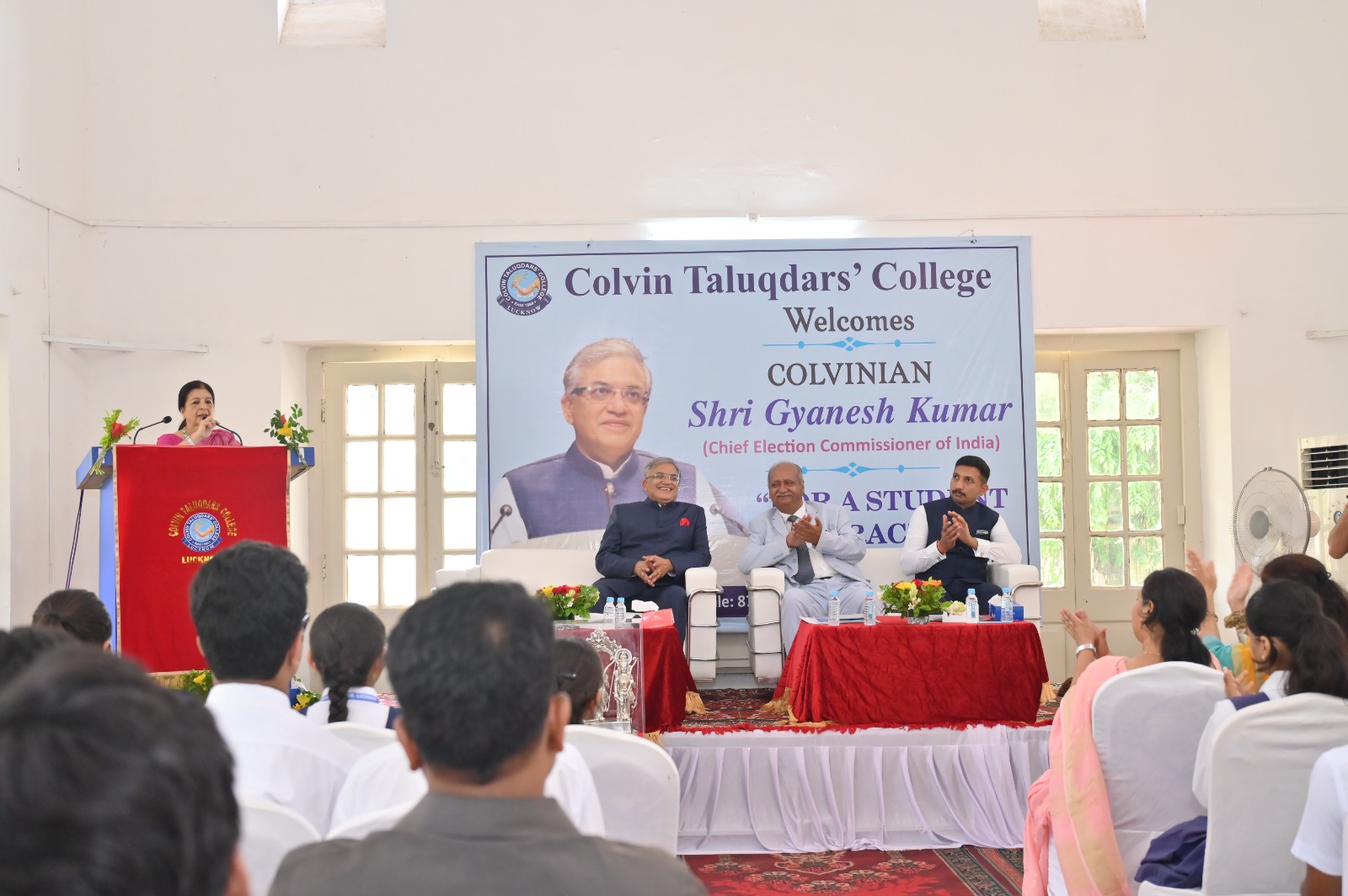
In his welcome address, the Principal described Kumar’s visit as a special homecoming for a distinguished alumnus and an important opportunity for students to understand the functioning of India’s electoral system. The session sought to connect students with the practical dimensions of democracy and encourage greater awareness among young citizens.
Addressing students and faculty members, Gyanesh Kumar spoke about the enormous scale and complexity involved in conducting elections in India. He highlighted the extensive human resources required by the Election Commission of India, noting that more than one crore personnel are mobilised during nationwide elections. He underlined the logistical and administrative challenges of conducting elections across a country marked by vast geographical, demographic and social diversity.
Referring to recent elections in states including Bihar, Tamil Nadu and West Bengal, Kumar highlighted the high level of voter participation witnessed in the country. He pointed out that West Bengal recorded voter turnout of more than 93 per cent, describing the figure as exceptionally high even in comparison with countries where voting is legally mandatory.
The interaction became particularly engaging during the question-and-answer session, when students raised a range of questions concerning the electoral process and the role of citizens.
Vanshika Singh asked about the biggest challenges faced while conducting elections. In response, Kumar explained that election management involves extensive logistical planning, security coordination and ground-level arrangements across diverse geographical areas. He emphasised the need for meticulous preparation to ensure that the electoral process remains smooth, secure and accessible.

Aditya Srivastava raised a question about the role of first-time voters. Kumar stressed the importance of youth participation, observing that informed and active young voters are essential to sustaining a vibrant democracy. He encouraged students approaching voting age to understand their rights and responsibilities and participate constructively in the democratic process.
Sakina asked about measures designed to make elections more accessible to senior citizens and persons with disabilities. Kumar outlined several initiatives, including ramps, wheelchair assistance, priority queues and home-voting facilities for eligible voters. He emphasised the Election Commission’s efforts to make the electoral process inclusive and ensure that eligible citizens are not prevented from exercising their franchise because of accessibility challenges.
Kartik Shukla sought to know about the preparations undertaken before elections are formally announced. Kumar explained that election management begins months in advance and involves several stages, including revision of electoral rolls, detailed planning, assessment of requirements and security arrangements, as well as coordination among different agencies and officials.
The interaction took an emotional turn when Rudransh Pratap Singh asked Kumar about his memories of Colvin Taluqdars’ College during his student years from 1979 to 1981.
Recalling his school days, Kumar spoke warmly about returning to the campus after several decades. He said that walking through the college brought back a flood of memories and reflected on the influence of his teachers and the institution on his life. He fondly remembered Mr. Tripathi, who taught Physics; Mr. Samiullah, who taught Chemistry; Mr. S.B. Singh, who taught English; and former Principal Mr. S.N. Tandon.
Gyanesh Kumar credited the discipline, values and academic foundation he received at Colvin Taluqdars’ College with playing an important role in shaping his journey in public service. His recollections added a personal and nostalgic dimension to what was otherwise an informative interaction on elections and democracy.
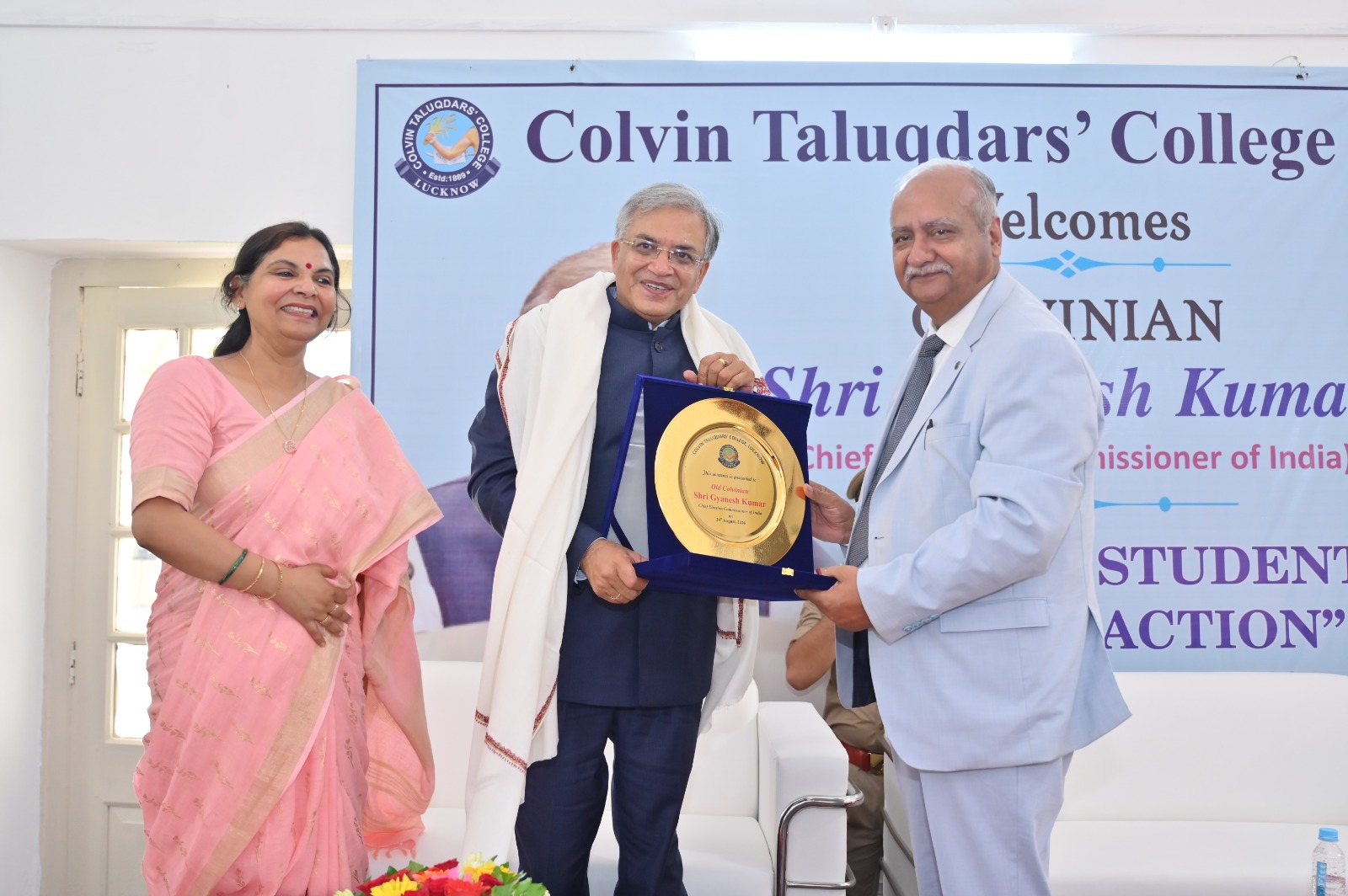
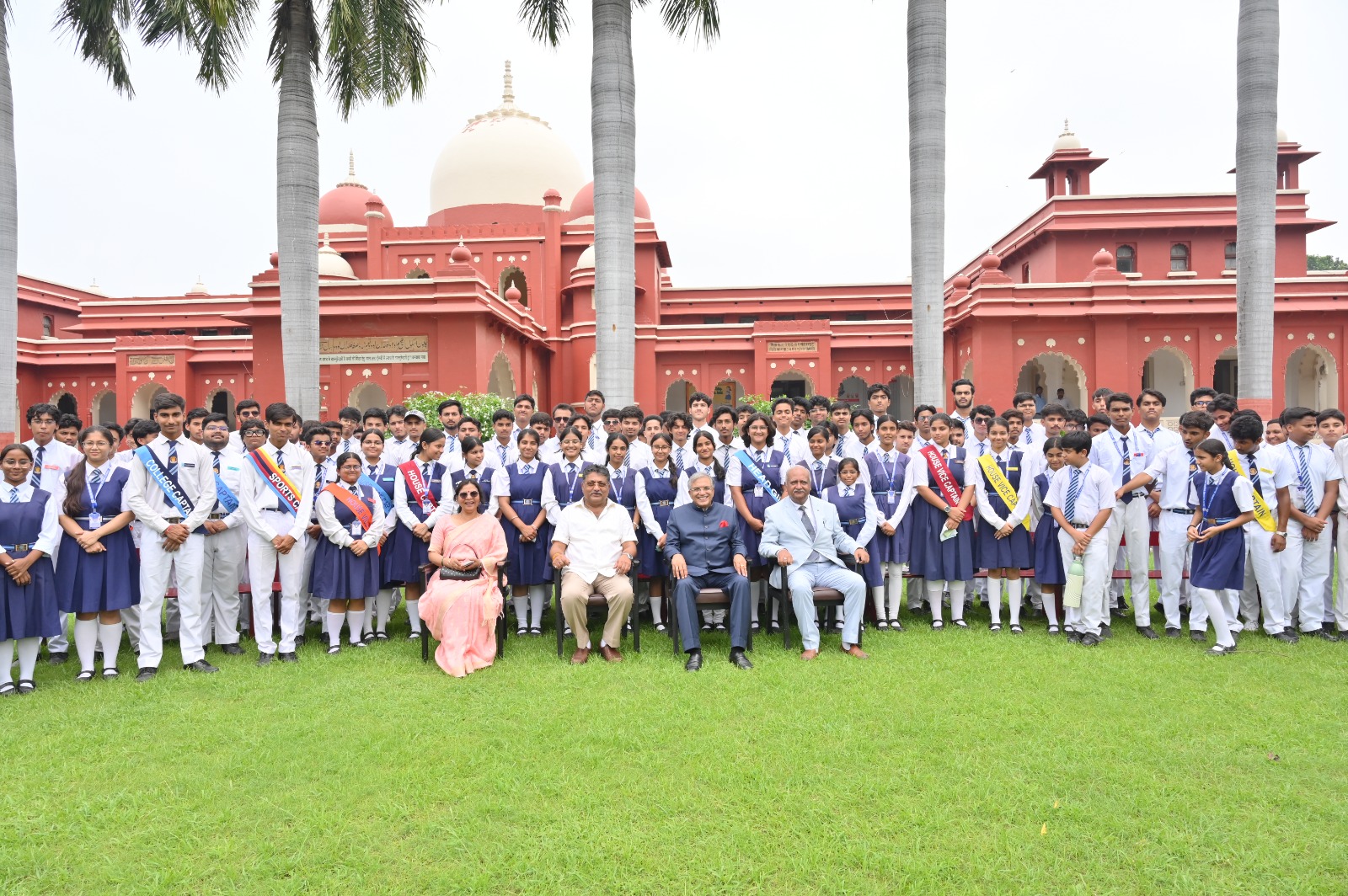
The programme concluded with a formal vote of thanks. The college management and administration honoured Shri Kumar with a commemorative memento and a traditional shawl. A group photograph was subsequently taken with dignitaries, faculty members and student representatives.
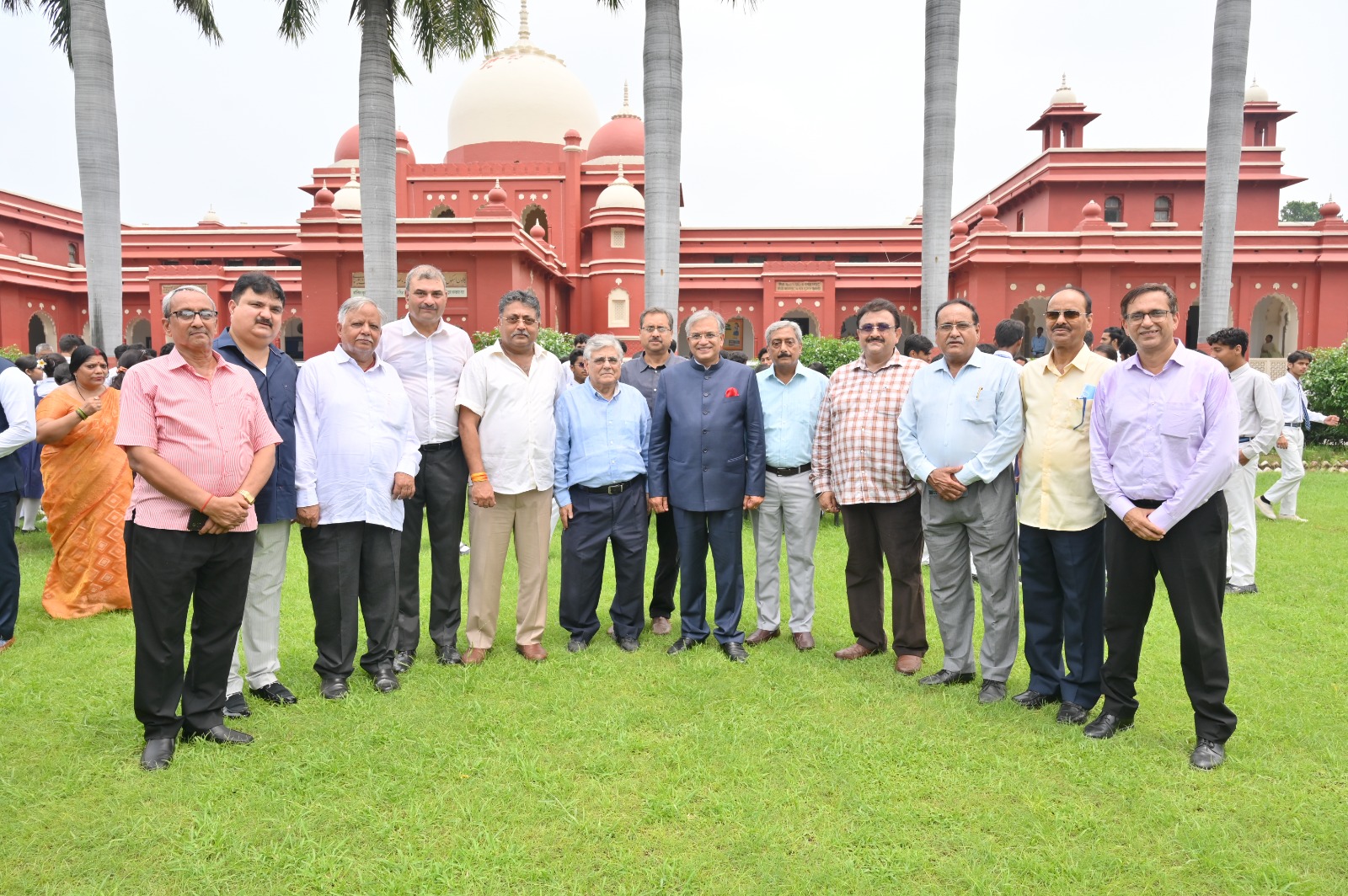
Before concluding his visit, Kumar took a nostalgic tour of the college campus and its heritage grounds, revisiting familiar locations associated with his student years. His return to the institution brought together his present role as the country’s Chief Election Commissioner and his formative years as a student of Colvin Taluqdars’ College, making the occasion both a lesson in democracy and a memorable homecoming.